The Stakeholder You Don’t Sell To, But Need to Win
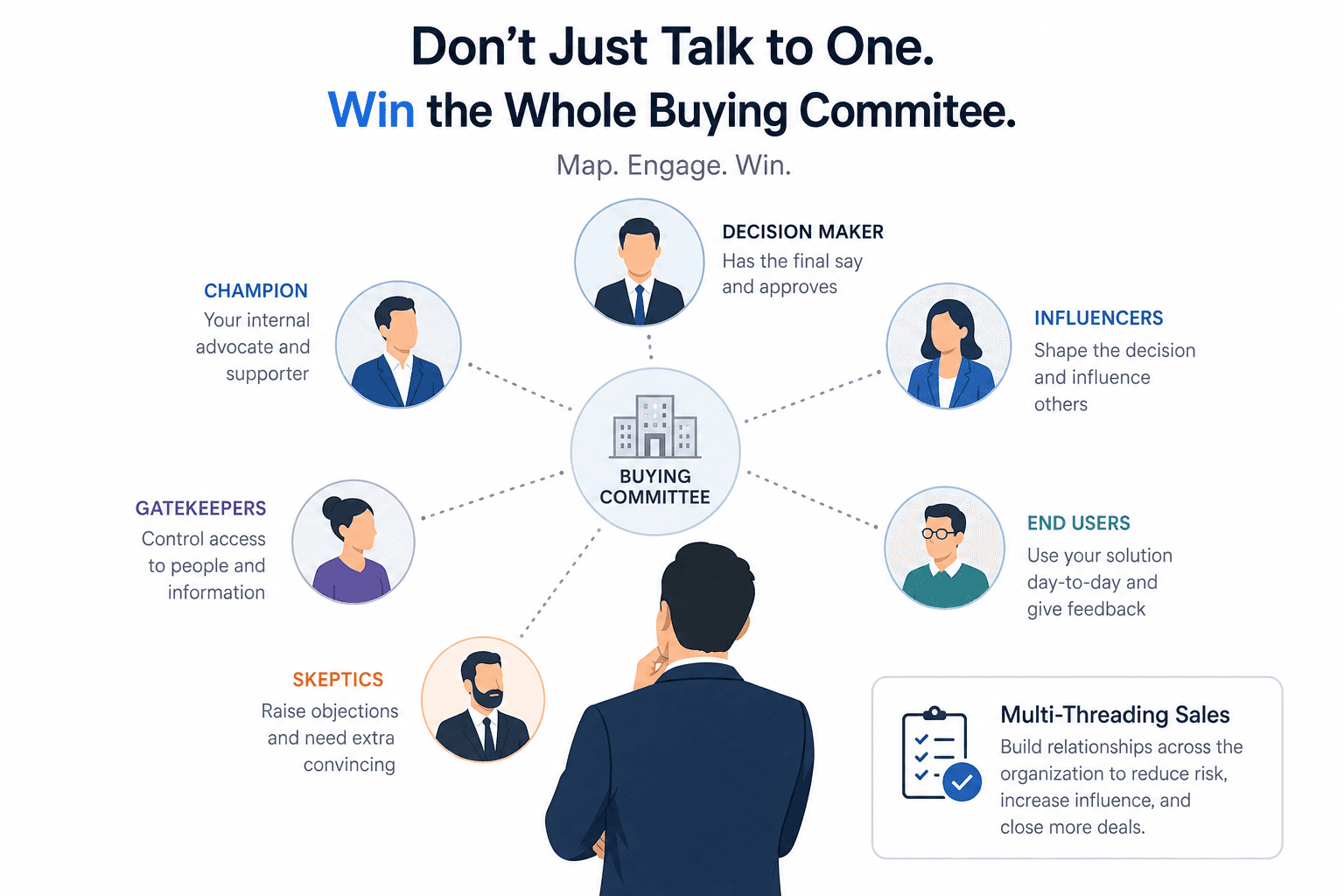
In B2B sales, the true complexity of your deal often lies in the people you never meet. Buyers rarely make decisions in isolation, especially as deal sizes grow. Studies show that the average B2B buying committee involves 6-8 decision makers, yet most sales reps only engage with one or two stakeholders. This gap can be the difference between closing a deal and watching it stall indefinitely.
If your sales strategy is focused on a single point of contact, you’re ignoring the larger network of influencers and decision makers who hold real sway in the buying process. It’s time to rethink how you approach deals, embrace multi-threading sales techniques, and build a stakeholder mapping strategy that ensures no key player is left out.
Why Single-Threaded Deals Are Risky
Single-threaded deals—where you rely on just one relationship within a prospective account—are like walking a tightrope without a safety net. Sure, the person you’re working with may seem enthusiastic, but what happens when they:
- Lose influence internally? Your champion might not have the clout to push your solution through the buying committee.
- Leave the company? Employee churn could instantly dissolve your progress.
- Face internal objections? Without broader buy-in, your deal could be vetoed by a stakeholder you’ve never even spoken to.
Today’s B2B buying process is more collaborative than ever. According to Gartner, the average deal involves multiple functional areas, such as IT, finance, procurement, and department heads. Without access to these stakeholders, your pitch may never reach the people who control the budget or approve the final decision.
The Anatomy of a B2B Buying Committee
Before you can sell effectively, you need to understand who’s involved in a typical B2B buying committee. While the exact composition will vary by company and industry, here are the common roles you’re likely to encounter:
- The Champion: Your internal advocate who pushes for your solution. This is often your first point of contact.
- The Decision Maker: The person with the final say. In many cases, this is the CFO, CEO, or another high-ranking executive.
- The Influencers: Team members who shape the decision without directly approving it. This could be department heads or senior managers.
- The Gatekeepers: People who control access to higher-ups or critical information, such as executive assistants or procurement teams.
- The End Users: Employees who will use your product or service daily. Their feedback can often sway the final decision.
- The Skeptics: Stakeholders who voice objections, often from legal or finance, and need extra convincing.
Understanding how these roles interact is crucial for effective stakeholder mapping in sales.
Multi-Threading Sales: A Blueprint for Success
Multi-threading sales is the practice of building relationships with multiple stakeholders within an account to reduce risk and increase deal velocity. Here’s how you can implement it:
1. Start with Stakeholder Mapping
Stakeholder mapping in sales is the process of identifying all the key players involved in a deal. Use tools like CRM platforms or deal page solutions like IntoPact to document:
- Names, titles, and departments
- Decision-making authority
- Pain points and priorities
- Level of influence (e.g., high, medium, low)
A clear visual of the buying committee helps you identify gaps in your outreach and plan your next steps.
2. Tailor Your Messaging
Each stakeholder has different concerns. For example:
- The CFO cares about ROI and cost savings.
- The IT manager is focused on integration and security.
- The end user wants ease of use and better workflows.
Craft personalized messages that address each stakeholder’s unique priorities. This shows that you’ve done your homework and builds trust faster.
3. Leverage Your Champion
Your champion can be instrumental in introducing you to other decision makers. Equip them with resources like case studies or ROI calculators to share internally. Encourage them to bring more stakeholders into calls or demos.
4. Use Technology to Scale
Platforms like IntoPact enable you to centralize deal communication. Instead of sending static PDFs or juggling multiple tools, share a dynamic URL that evolves with your prospect’s needs. This makes it easy for the buying committee to collaborate and keeps everyone aligned.
How Many Decision Makers Are Too Many?
While it’s essential to engage the entire B2B buying committee, spreading yourself too thin can be counterproductive. Focus on the stakeholders who have the most influence over the decision. Here’s how to prioritize:
- Identify the Economic Buyer: This is the person who controls the budget. If they’re not involved, your deal is unlikely to move forward.
- Engage the Influencers: These are the stakeholders who can champion your solution internally or derail the process.
- Address the Skeptics Early: Don’t wait for objections to surface late in the deal cycle. Proactively address concerns to build credibility.
Quality over quantity is key. It’s better to have meaningful conversations with 4-5 high-impact stakeholders than superficial touchpoints with a dozen.
Tools and Strategies for Stakeholder Mapping in Sales
Mapping stakeholders doesn’t have to be a manual process. Here are some tools and strategies to streamline your efforts:
- CRM Software: Use tools like HubSpot, Salesforce, or Pipedrive to track relationships and map organizational hierarchies.
- LinkedIn: Leverage LinkedIn to research connections, mutual contacts, and job roles within target accounts.
- Deal Page Solutions: Platforms like IntoPact consolidate all deal-related information, making it easier to collaborate with stakeholders and keep everyone on the same page.
- Internal Resources: Don’t overlook your own team. Ask colleagues if they have existing relationships within your target account.
By combining these tools with a strong multi-threading strategy, you’ll build a comprehensive view of the buying committee and increase your chances of closing the deal.
Conclusion: Don’t Let Invisible Stakeholders Derail Your Deals
In today’s collaborative B2B sales environment, relying on a single-threaded approach is a recipe for stalled deals and missed opportunities. The reality is that every deal involves multiple decision makers, influencers, and skeptics. If you’re not actively engaging the full B2B buying committee, you’re leaving your success to chance.
By mastering stakeholder mapping, adopting multi-threading sales techniques, and leveraging tools like IntoPact to streamline communication, you can navigate complex deals with confidence. Don’t let the stakeholder you’ve never met be the reason your deal doesn’t close. Instead, take proactive steps to build relationships across the entire organization—and watch your win rate soar.
Ready to close deals faster?
From “Contact Sales” to cash — one platform for structured B2B deals. No handoffs, no stitched tools.
Book a demo