The Toggle That Kills the Round Trip: How Interactive Pricing Eliminates Weeks of Back-and-Forth
In B2B sales, time is money. Yet, far too often, deals get bogged down in endless email threads, versioned PDFs, and unclear pricing discussions. Sales teams spend weeks volleying proposals back and forth, only to lose deals to competitors who can move faster. What if you could eliminate this inefficiency, streamline the process, and close deals faster—all without sacrificing accuracy or control?
Enter interactive pricing and buyer self-service tools. These innovations are reshaping how B2B transactions unfold, giving sellers the ability to empower buyers while maintaining control over pricing boundaries. No more static PDFs. No more waiting for approval cycles. No more missed opportunities. Let’s explore how interactive pricing and a modern CPQ alternative like IntoPact can transform your sales process.
The Problem with Traditional Proposal Workflows
Before diving into the solution, it’s essential to understand why traditional workflows are failing B2B sales teams.
Static PDFs Are a Bottleneck
Most sales teams rely on PDFs for proposals. While these files are easy to share, they’re also rigid. If a buyer requests a change—whether it’s adjusting pricing options, adding a new feature, or tweaking terms—your team has to go back, edit the file, and send a new version. This process can take hours or even days, depending on internal approval chains.
Endless Back-and-Forth Eats Up Time
The typical buyer-seller interaction looks like this:
- Seller sends a proposal.
- Buyer requests changes.
- Seller updates the proposal.
- Buyer reviews and requests more changes.
- Repeat until both sides are happy.
This back-and-forth process can stretch for weeks, delaying deals and frustrating both parties.
Lack of Transparency Hurts Buyer Confidence
Buyers today expect clarity and autonomy. Static proposals often leave them guessing about the impact of changes to pricing or configurations. This lack of transparency can erode trust and make buyers more hesitant to commit.
What Is Interactive Pricing?
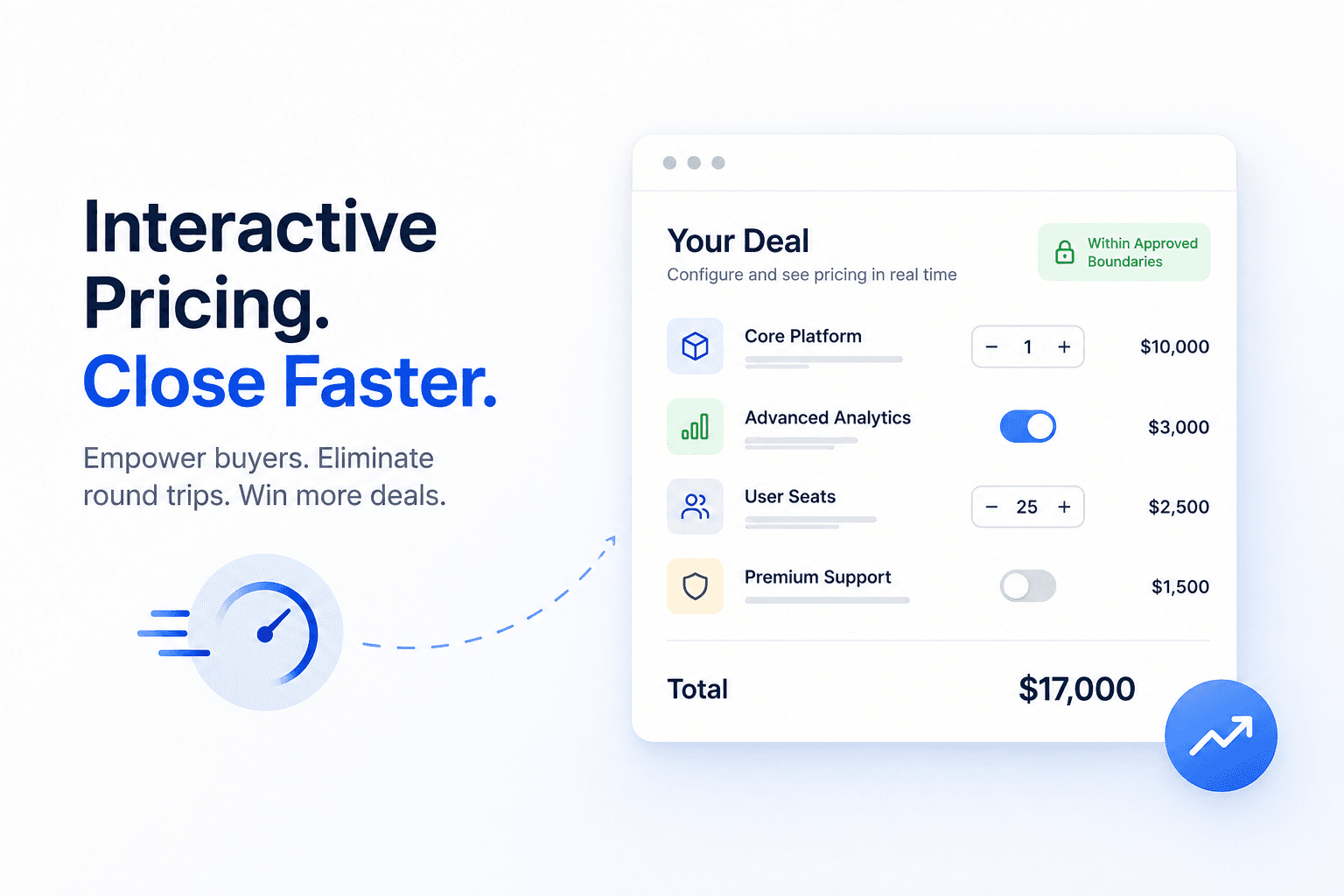
Interactive pricing flips the script on the traditional proposal process. Instead of relying on static documents, sellers provide buyers with a dynamic, interactive deal page. This page allows buyers to configure options, explore pricing scenarios, and make decisions in real time—all within boundaries set by the seller.
Key Features of Interactive Pricing
- Real-Time Adjustments: Buyers can toggle features, adjust quantities, or explore add-ons, instantly seeing how these changes impact the total price.
- Pre-Approved Boundaries: Sellers set the parameters for pricing, ensuring that buyers can’t go outside acceptable limits.
- Transparent Communication: Buyers get a clear view of how their choices affect pricing, reducing uncertainty and building trust.
- Single URL Access: Instead of juggling multiple versions of a PDF, buyers and sellers work off a single, constantly updated link.
Benefits of Interactive Pricing for B2B Sales
Interactive pricing isn’t just a shiny new tool—it’s a game-changer. Here’s how it delivers tangible benefits to B2B sales teams.
1. Accelerates Deal Cycles
By enabling buyers to configure price quotes directly, interactive pricing eliminates the need for constant back-and-forth. Buyers can make decisions faster, and sellers can focus on closing deals instead of revising proposals.
2. Enhances Buyer Experience
Today’s B2B buyers expect the same seamless experience they get as consumers. Interactive pricing empowers them to explore options and self-serve within a guided framework, making the buying process smoother and more engaging.
3. Reduces Errors and Miscommunication
With pre-approved pricing boundaries in place, there’s less room for mistakes. Buyers can’t accidentally configure something that your team can’t deliver, and sellers don’t have to manually calculate pricing adjustments.
4. Aligns Sales and Revenue Operations
Interactive pricing platforms like IntoPact serve as a CPQ alternative, bridging the gap between sales and revenue operations. They provide a centralized, dynamic tool that ensures both teams are aligned on pricing strategy and deal terms.
How IntoPact Powers Buyer Self-Service Pricing
IntoPact is more than just a proposal tool—it’s an all-in-one platform that replaces static PDFs, landing pages, and e-signature tools with a single URL that evolves with the deal lifecycle. Here’s how it supports buyer self-service pricing and streamlines your sales process.
Dynamic Pricing Options
With IntoPact, buyers can toggle features, select packages, and see immediate pricing updates—all within the parameters you’ve set. This flexibility reduces friction and empowers buyers to make confident decisions.
Seamless Collaboration
Forget email chains and versioned files. IntoPact keeps everything in one place, so buyers and sellers can collaborate in real time. Need to make a quick adjustment? No problem—both parties see the update instantly.
Built-In Approvals
IntoPact ensures that every pricing configuration stays within pre-approved boundaries. This eliminates the risk of unauthorized discounts or configurations that don’t align with your pricing strategy.
Closing Made Easy
Once a buyer is ready to move forward, they can sign directly within the platform. No need for separate e-signature tools. This seamless process reduces friction and shortens the time to close.
Why Interactive Pricing Is the Future of B2B Sales
The shift to interactive pricing isn’t just a trend—it’s a necessary evolution for B2B sales teams that want to stay competitive. Here’s why:
- Buyers Demand Transparency: Today’s buyers want to know exactly what they’re paying for and why. Interactive pricing provides the clarity they crave.
- Speed Wins Deals: The faster you can deliver a tailored, accurate proposal, the more likely you are to close the deal. Interactive pricing eliminates the delays caused by traditional workflows.
- Scalability Requires Efficiency: For SaaS companies and other growing businesses, scaling sales efforts means optimizing every step of the process. Interactive pricing tools like IntoPact make this possible.
How to Get Started with Interactive Pricing
Ready to kill the round trip and start closing deals faster? Here’s how to get started:
- Evaluate Your Current Workflow: Identify the bottlenecks in your proposal and pricing process. Where are deals getting delayed? What frustrates your buyers?
- Set Clear Pricing Boundaries: Work with your revenue operations team to define acceptable pricing configurations and discounts.
- Choose the Right Tool: Look for a CPQ alternative like IntoPact that offers dynamic pricing, collaboration features, and built-in e-signature capabilities.
- Train Your Team: Make sure your sales reps understand how to use the tool effectively. Highlight how it will save them time and help them close more deals.
- Iterate and Improve: Use data from your interactive pricing tool to identify trends, refine your pricing strategy, and continuously improve your sales process.
Conclusion: Empower Buyers, Close Faster
Interactive pricing is more than just a feature—it’s a paradigm shift in how B2B sales teams engage with buyers. By eliminating the inefficiencies of static PDFs and endless back-and-forth, tools like IntoPact empower buyers to make decisions faster while giving sellers the control they need.
If your team is ready to accelerate deal cycles, enhance the buyer experience, and reduce friction, it’s time to embrace the future of proposal pricing options. Interactive pricing isn’t just the toggle that kills the round trip—it’s the strategy that wins deals in today’s fast-paced B2B landscape.
Ready to close deals faster?
From “Contact Sales” to cash — one platform for structured B2B deals. No handoffs, no stitched tools.
Book a demo