The Zero-Handoff Pipeline: How Small Teams Go from First Customer Contact to First Invoice Without Re-Entering a Single Field
For small B2B teams, the sales process often feels like a relay race full of baton drops. Lead details get lost between tools, manual data entry slows momentum, and internal miscommunication creates friction when speed matters most. These inefficiencies don’t just waste time — they can cost you deals.
But what if your sales pipeline didn’t require constant handoffs? What if your team could take a lead from first contact to signed contract without ever re-entering data or switching platforms? This is the promise of a zero-handoff pipeline, and it’s a game changer for small teams trying to scale without adding complexity.
In this post, we’ll explore how small B2B teams can streamline their sales processes using a single workflow. We’ll break down the core elements of a zero-handoff pipeline and show you how it saves time, reduces errors, and keeps your team focused on what matters most: closing deals.
Why Small B2B Teams Need a Zero-Handoff Pipeline
Small teams are at a disadvantage when it comes to juggling multiple tools. Unlike enterprise sales teams with dedicated roles for lead management, deal tracking, and contract execution, small B2B teams often wear many hats. This makes efficiency critical.
Here’s why traditional workflows fail small teams:
- Tool Overload: Managing multiple tools for CRM, task tracking, contract signing, and lead capture creates silos and inefficiencies.
- Manual Data Entry: Re-entering customer information across platforms wastes time and increases the risk of errors.
- Lost Momentum: Switching between tools and chasing down information interrupts your team’s flow, slowing the deal cycle.
A zero-handoff pipeline eliminates these bottlenecks by enabling seamless transitions from one stage to the next — all within a single platform.
The Core Elements of a Zero-Handoff Pipeline
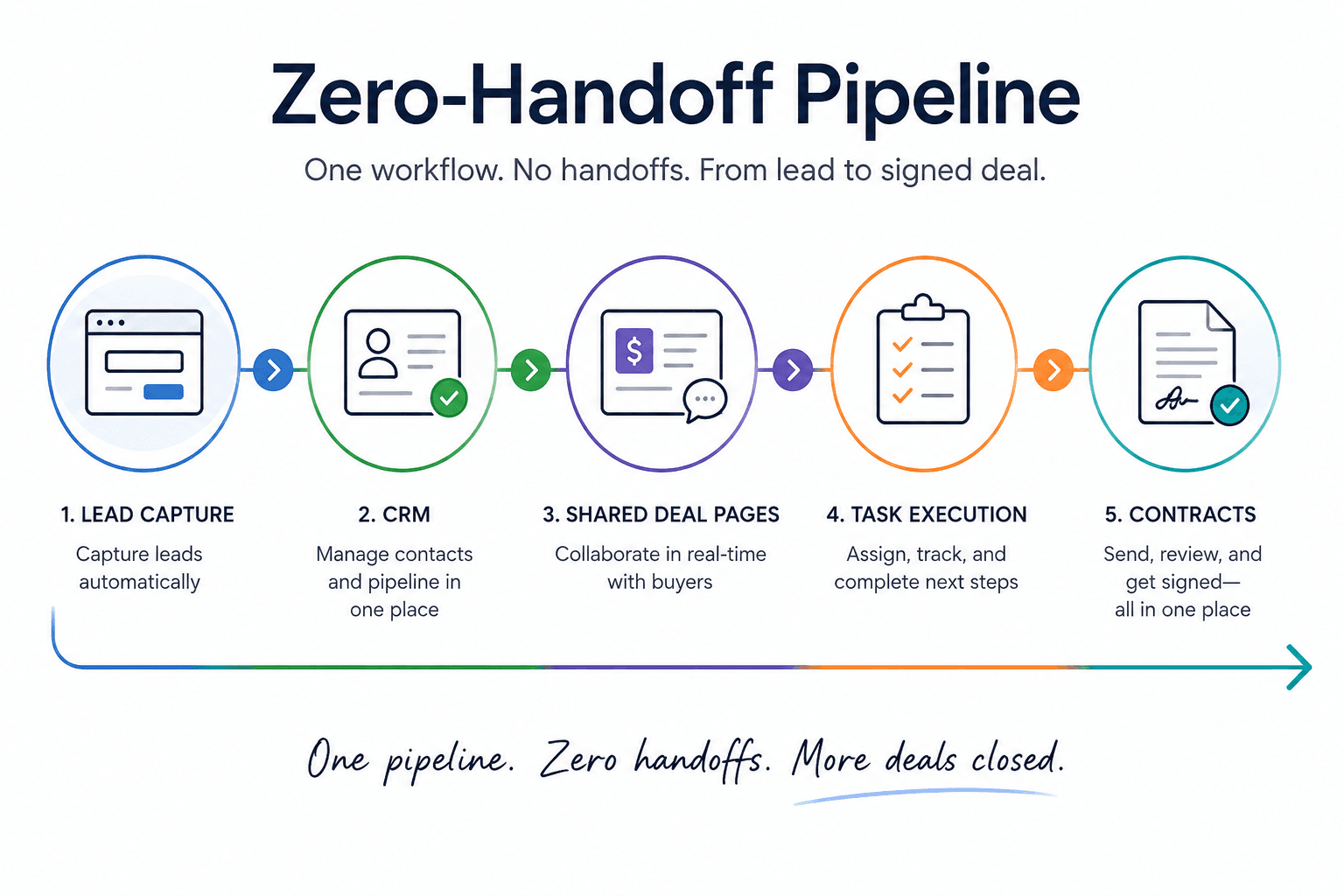
To implement a zero-handoff pipeline, you need a sales system that integrates every step of your process into one cohesive workflow. Let’s break down the five key elements that make this possible.
1. Lead Capture: One Entry Point for Every Prospect
The journey starts with capturing leads efficiently. Whether leads come through email campaigns, social media ads, or inbound inquiries, your system should funnel them into one place without manual uploads.
With tools like campaign landing pages and inbound forms, you can:
- Automatically sync lead data into your CRM.
- Segment leads by source or campaign for better targeting.
- Eliminate the need for spreadsheets or manual imports.
A centralized lead capture process ensures no prospect falls through the cracks and gives your team instant access to actionable data.
2. Lightweight CRM: Keep Data Clean and Accessible
Once a lead enters your pipeline, your CRM becomes the hub for managing all interactions. Unlike bulky enterprise CRMs, a lightweight CRM is designed for small teams that need simplicity and speed.
Key benefits include:
- Unified Contact Records: All customer details, notes, and activity logs in one place.
- Pipeline Visibility: Track deal stages at a glance without complicated dashboards.
- Ease of Use: No steep learning curve or wasted time configuring features you don’t need.
When your CRM is intuitive and integrated, your team can focus on building relationships instead of wrestling with software.
3. Shared Deal Pages: Collaboration Without Friction
Collaboration with buyers often involves endless back-and-forth emails and scattered attachments. Shared deal pages solve this by creating a single URL where both sides can view, interact, and track progress — without requiring the buyer to log in.
Here’s how shared deal pages enhance your pipeline:
- Transparency: Buyers can see proposals, pricing, and timelines in real-time.
- Streamlined Communication: No more searching for email threads or outdated PDFs.
- Faster Decisions: By reducing friction, buyers can approve deals faster.
This approach doesn’t just simplify your workflow; it creates a better experience for your buyers, too.
4. Task Execution: Clear Next Steps for Every Deal
Sales success often hinges on follow-through. Without clear next steps, deals stall and opportunities slip away. That’s why integrated task management is essential in a zero-handoff pipeline.
With built-in task execution, you can:
- Assign follow-ups, calls, or meetings directly from the deal page.
- Track task completion to ensure nothing gets overlooked.
- Stay aligned as a team with shared visibility into priorities.
By embedding task management into your workflow, you keep the momentum going without needing a separate tool.
5. Contract Progression: From Proposal to Signed Deal in One Place
The final stage of the pipeline often involves the most friction: creating proposals, negotiating terms, and getting signatures. A zero-handoff pipeline eliminates these pain points by keeping everything on the same page.
Features like integrated contracts allow you to:
- Generate and send proposals directly from the deal page.
- Enable buyers to review, comment, and accept online.
- Streamline renewals without starting from scratch.
When contracts are part of your pipeline, you can close deals faster and with fewer headaches.
The Benefits of a Zero-Handoff Pipeline
Adopting a zero-handoff pipeline doesn’t just save time — it transforms how your team works. Here are the key benefits:
- Increased Efficiency: Automating transitions between stages reduces manual work and frees up your team to focus on selling.
- Fewer Errors: Eliminating data re-entry minimizes mistakes that can derail deals.
- Stronger Collaboration: Shared deal pages and task management keep everyone aligned, both internally and with buyers.
- Faster Deal Cycles: By removing friction at every stage, you can shorten the time from lead to signed contract.
- Scalability: A zero-handoff pipeline grows with your team, enabling you to handle more deals without adding complexity.
How to Get Started with a Zero-Handoff Pipeline
Ready to streamline your sales process? Follow these steps to create your own zero-handoff pipeline:
- Audit Your Current Workflow: Identify where handoffs occur and where data entry slows you down.
- Consolidate Tools: Evaluate platforms like IntoPact that combine lead capture, CRM, task management, and contracts into one system.
- Map Your Pipeline: Define the stages of your sales process and ensure your system supports seamless transitions.
- Train Your Team: Ensure everyone understands the new workflow and how to maximize its potential.
- Monitor and Optimize: Continuously review your pipeline metrics to identify areas for improvement.
By taking these steps, you can build a streamlined pipeline that accelerates growth without overwhelming your team.
Conclusion: Focus on Selling, Not Switching Tools
For small B2B teams, every minute spent switching tools or re-entering data is a minute not spent closing deals. A zero-handoff pipeline eliminates these inefficiencies, enabling your team to work smarter, not harder.
By integrating lead capture, CRM, shared deal pages, task execution, and contracts into one seamless workflow, you can go from first customer contact to first invoice without missing a beat. The result? Faster sales cycles, happier buyers, and a team that’s empowered to focus on what they do best.
If your current setup feels like a patchwork of disconnected tools, it’s time to rethink your pipeline. With the right system in place, you can leave handoffs behind and build a sales process that scales with your business.
Ready to close deals faster?
From “Contact Sales” to cash — one platform for structured B2B deals. No handoffs, no stitched tools.
Book a demo