What to Do When a Prospect Goes Silent After Your Proposal
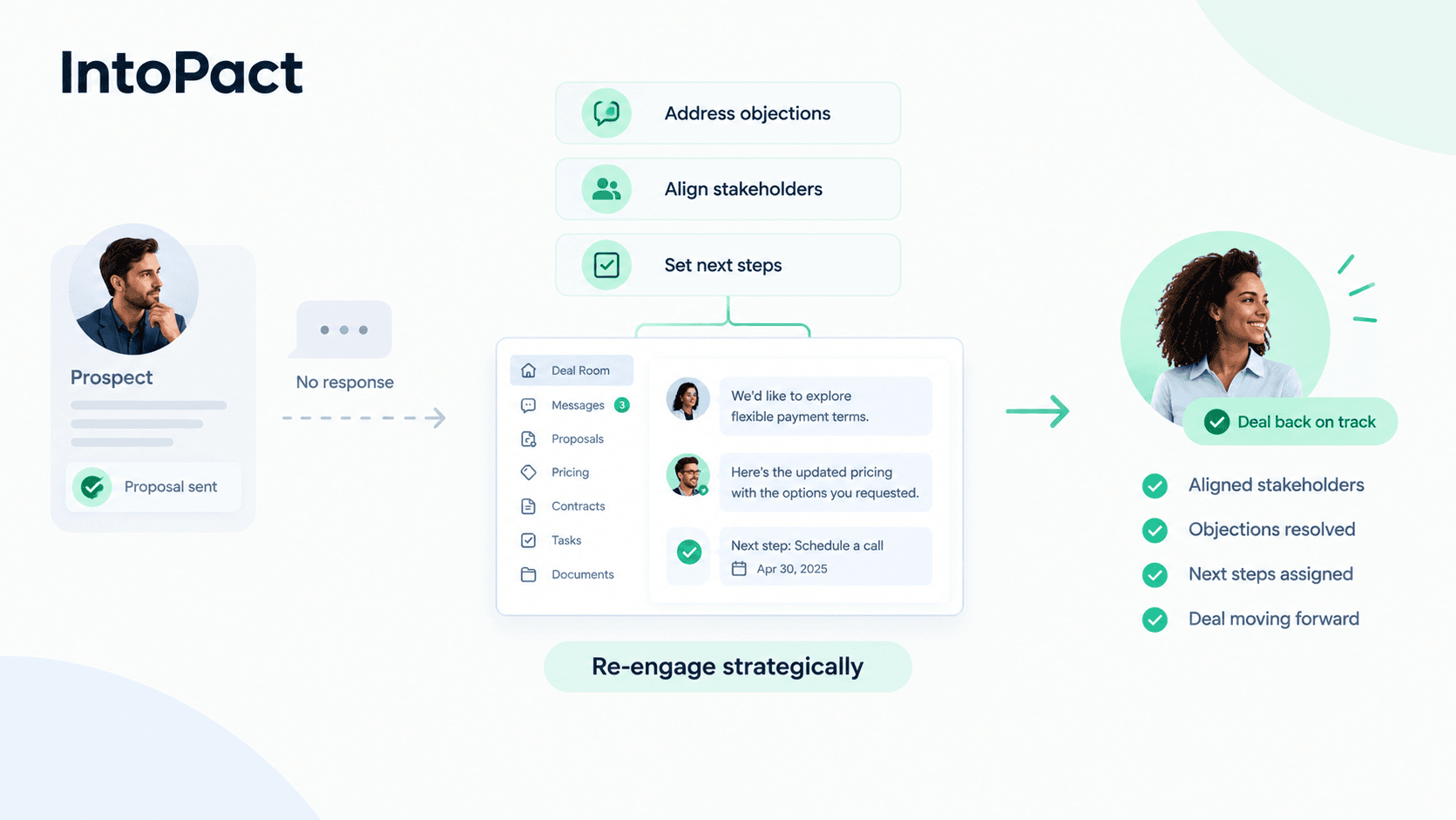
Key takeaway: When a prospect goes silent after your proposal, it's not necessarily the end of the deal. A structured approach to re-engage them—by addressing objections, aligning stakeholders, and creating actionable next steps—can save the opportunity and move it toward a close.
Silence Doesn't Always Mean "No"
Few things are as frustrating for B2B teams as a prospect going silent after receiving a well-crafted proposal. You’ve invested hours (or days) tailoring the perfect offer, only to be met with... nothing. No feedback, no objections, no next steps—just radio silence. But here’s the good news: silence doesn’t mean the deal is lost. It’s often a signal of internal roadblocks, misalignment among stakeholders, or plain old oversight.
The reality is, most deals don’t die because of outright rejection. They die because no action is taken. By implementing a system to manage this critical post-proposal phase, you can recover deals that might otherwise slip through the cracks. Let’s explore actionable strategies to re-engage prospects and bring stalled deals back to life.
1. Diagnose the Silence: Why Do Prospects Go Quiet?
Before you act, it’s important to understand why a prospect might suddenly go quiet. Here are some common reasons:
- Internal priorities shifted: Your prospect’s team may have other fires to put out.
- Stakeholder misalignment: Decision-makers might not all be on the same page about your proposal.
- Unaddressed objections: Concerns about budget, timing, or implementation could be lingering in the background.
- Information overload: A complex proposal without clear next steps can overwhelm buyers.
- Forgetting to follow up: Yes, it happens. People are busy, and emails get buried.
The key to recovery is not to make assumptions. Instead, approach the situation with curiosity and a plan to uncover the true reason for the silence.
2. Re-Engage Strategically: Don't Just "Check In"
Many sales teams default to vague follow-ups like, “Just checking in to see if you’ve had a chance to review the proposal.” While this approach might occasionally work, it often adds little value and can even come across as pushy. Instead, use thoughtful, structured outreach to re-capture your prospect's attention.
Here’s how to structure your follow-up:
A. Add Value in Every Interaction
Your follow-up should provide new information or insights, such as:
- A case study or success story that mirrors their challenges.
- A fresh perspective on their industry trends or pain points.
- Answers to potential objections you anticipate (e.g., ROI breakdowns).
B. Offer a Specific Reason to Respond
Avoid open-ended questions like, “What did you think of the proposal?” Instead, try:
- “Would you like to schedule a quick call to discuss how we can address X challenge?”
- “We’ve updated our solution to include XYZ feature, which aligns with your goals. Can we explore this together?”
C. Use Multiple Channels
If email hasn’t worked, try connecting via LinkedIn, a quick phone call, or even a video message. Different stakeholders respond to different channels, so diversify your approach.
3. Align Stakeholders in a Shared Deal Room
One of the biggest challenges in B2B sales is ensuring all stakeholders are aligned, especially after a proposal is sent. If one person is interested but another decision-maker has objections, the deal can quickly stall.
With a platform like IntoPact, you can centralize communication in a shared deal room. This allows both buyers and sellers to:
- Collaborate on proposal details in real time.
- Capture and address objections in a visible thread.
- Invite additional stakeholders without requiring logins or complicated tools.
By creating a transparent and collaborative space, you eliminate the risk of miscommunication and ensure everyone is on the same page.
4. Address Objections Before They Snowball
Silence can often signal unresolved objections. But the tricky part? Buyers don’t always voice them upfront. Instead of waiting for the prospect to share their concerns, proactively create opportunities for them to surface.
Use Open-Ended Questions
Ask questions that encourage dialogue, such as:
- “What’s the biggest challenge you see in moving forward?”
- “Are there any decision-makers we haven’t addressed yet?”
- “Do you have any concerns about the ROI or implementation timeline?”
Provide a Path to Resolve Concerns
Once objections are identified, address them head-on:
- If it’s a pricing concern, offer flexible payment terms using a pricing configurator like the one in IntoPact.
- If stakeholders need more time, suggest a phased rollout or pilot program.
5. Set Next Actions With Clear Ownership
A lack of defined next steps is often the final nail in the coffin for silent deals. If you leave the ball entirely in the buyer’s court, it’s easy for them to deprioritize your proposal. Instead, take control of the process by setting actionable next steps.
Use a Collaborative Approach
In your follow-up, propose specific actions with clear deadlines:
- “Let’s schedule a 20-minute call next Tuesday to finalize the details.”
- “Can we agree to review the updated proposal by Friday?”
Assign Owners and Deadlines
Platforms like IntoPact make this easy by allowing both buyers and sellers to assign tasks, set deadlines, and track progress—all in one place. This avoids ambiguity and ensures accountability on both sides.
6. Leverage Automation to Prevent Future Stalls
Recovering a silent deal is important, but preventing stalls from happening in the first place is even better. Automation tools can help you stay ahead of the curve by flagging deals that are at risk of stalling.
Use Stall Detection Features
For example, IntoPact’s deal room automatically detects when a proposal hasn’t been engaged with for a certain period. This allows your team to proactively re-engage before the deal goes completely cold.
Automate Invoicing and Contracting
Once the deal is accepted, platforms like IntoPact streamline the entire post-proposal process:
- Contract generation happens automatically after acceptance.
- Invoice schedules are created based on the buyer’s selections.
- Cash flow forecasting ensures your finance team stays ahead.
By removing manual handoffs and delays, you can keep deals moving smoothly from proposal to cash.
Conclusion: Turn Silence Into Opportunity
When a prospect goes silent after your proposal, don’t panic. Instead, take a proactive, structured approach to uncover the reasons for the stall and re-engage them effectively. Diagnose the silence, add value in every interaction, align stakeholders, and set clear next steps. With the right tools—like IntoPact’s shared deal rooms, pricing configurator, and automated contracting—you can recover stalled deals and prevent future ones from falling through the cracks.
Remember: Silence isn’t a dead-end; it’s an opportunity to demonstrate your commitment, creativity, and value. The teams that win in B2B sales are those who don’t just send proposals—they own what happens next.
Ready to close deals faster?
From “Contact Sales” to cash — one platform for structured B2B deals. No handoffs, no stitched tools.
Book a demo